

Dts Connect Vs Dolby Digital Live
Dolby Digital vs DTS: what's the deviation?

As home movie theatre has improved, new surround sound formats have sprung upwards, bringing more particular and realism to movie nights. Only let'due south go back to basics and look at the ii near pop surround sound formats: DTS and Dolby Digital.
Both DTS and Dolby Digital are audio compression technologies, assuasive moviemakers to record surround sound that can be reproduced in cinemas as well as homes. Both deliver spine-tingling multi-aqueduct sound, so what'due south the difference? And which is better?
The devil is in the detail. Or, more accurately, the manner that the two technologies encode audio.
DTS is encoded at a college bit rate and therefore is considered by some experts to be meliorate quality. Others argue that Dolby Digital's technology is more advanced and produces amend sound quality at a lower bit rate.
Dislocated? The good news is that both are widely supported and chances are yous won't have to play favourites.
In their most basic form, both DTS and Dolby Digital support 5.one-channel audio (i.east. a typical home cinema system with v speakers and one subwoofer). And more than advanced versions of the formats support 7.1-channels, HD surround sound and overhead speakers, in the form of DTS:X and Dolby Atmos.
You'll find DTS and Dolby Digital supported Blu-ray players, home cinema systems, games consoles, computers, set-height boxes and even smartphones. Read on to find out how DTS and Dolby Digital differ – and why it matters.
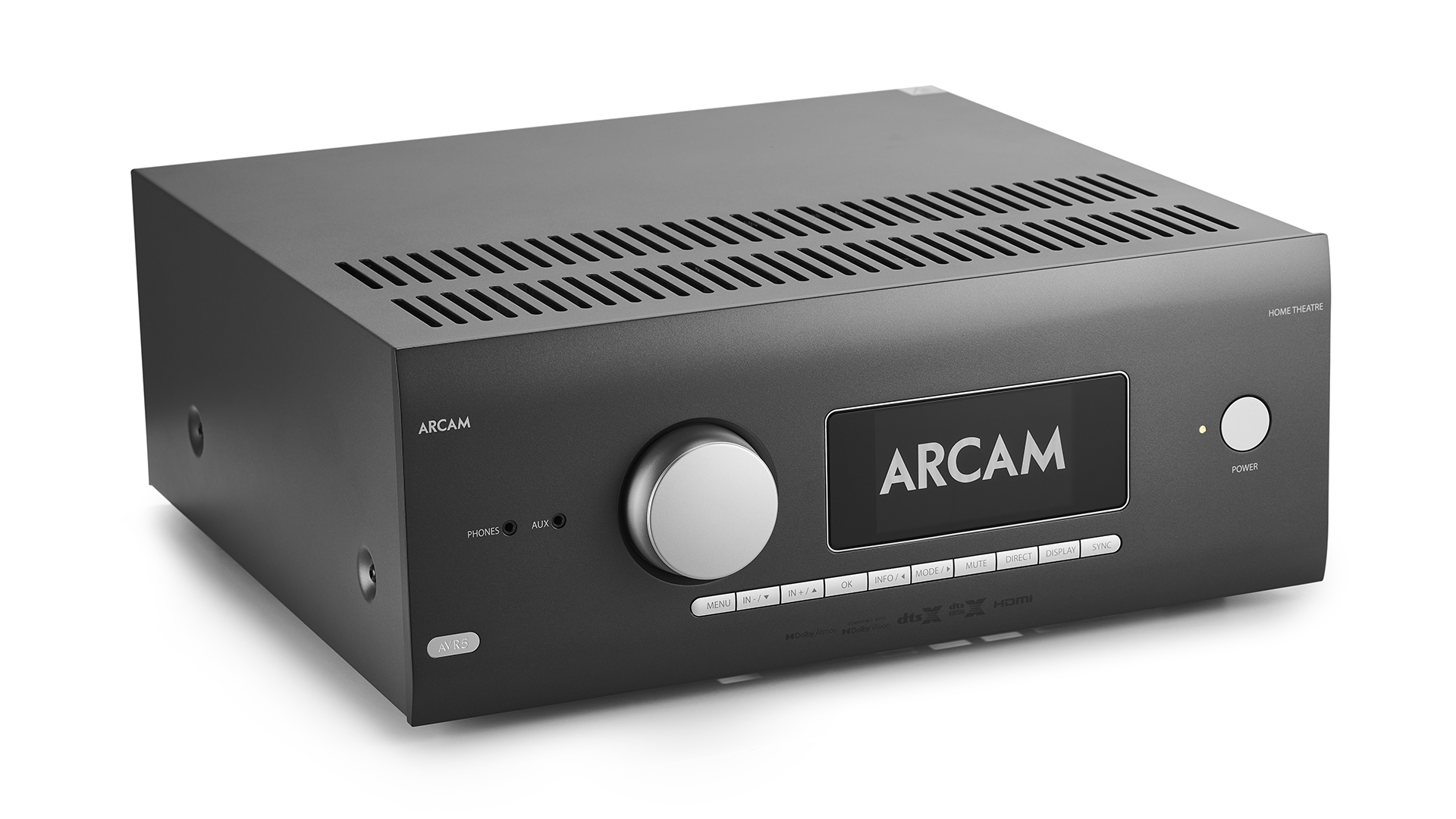
What is Dolby Digital?
Dolby Digital is a multi-aqueduct audio codec from Dolby Labs. It delivers a cinematic surroundings sound experience and is commonly referred to equally the 'industry standard' (primarily because Dolby Labs has been around longer than DTS).
The outset picture show to use Dolby Digital was Batman Returns in 1992. Since then, Dolby has released a slew of increasingly advanced codecs, including Dolby Digital Plus, which supports Hd environs sound and up to vii.1 speaker channels.
Want the best? Dolby TrueHD is a lossless format that promises to be identical to the moving-picture show studio's chief recording. So there's the object-based audio system yous'll no dubiety have heard of – Dolby Atmos.
What is DTS?
DTS (originally Digital Theater Systems) was founded in 1993 to compete with Dolby Labs for surround sound supremacy. The company got its big break when Steven Spielberg chose DTS for his dino-romp, Jurassic Park (opens in new tab).
In 1996, DTS began cropping up in consumer hardware. The visitor might non exist likewise known every bit its main rival, simply many purists believe that DTS offers amend sound quality because it encodes audio at higher bit-rates.
Like Dolby Digital, DTS has since released a plethora of more than advanced environs sound formats including DTS-HD High Resolution, which supports up to 7.ane speaker channels. DTS has also brought out a lossless format, DTS-Hd Primary Audio. There is also DTS:Ten, which competes with Dolby'south Atmos.
What is the difference between DTS and Dolby Digital?
Dolby Digital and DTS tin both deliver fantastic surround audio experiences – but there are some key differences in the way that they accomplish that cease outcome.
The major differences are the compression levels and bit-rates. Dolby Digital compresses five.i digital audio downwards to a bit-charge per unit of 640 kbits/s (kilobits per second) for Blu-ray discs. For DVD discs, it supports a slightly lower fleck-charge per unit: upwards to 448 kbits/south.
DTS, on the other mitt, is less compressed and supports higher fleck-rates of up to i.5Mb/s (megabits per 2d). For DVD discs, information technology supports up to 768 kbits/s.
The compression gap widens when you step up to the competing HD formats. Dolby Digital Plus supports up to 1.7Mbps, while DTS-HD Loftier Resolution supports upward to 6Mb/s. In theory, less pinch during encoding equals more than detailed sound that delivers a soundtrack closer to what was originally intended.
Case closed, then? Non so fast. Dolby argues that its codecs are more efficient than DTS codecs, and thus can sound every flake equally good or ameliorate, even at a lower fleck-rate.
Ultimately, you tin can expect a fine home cinema experience from both, and oftentimes your choice of soundtrack will come up downward to whichever is supported past your source material.
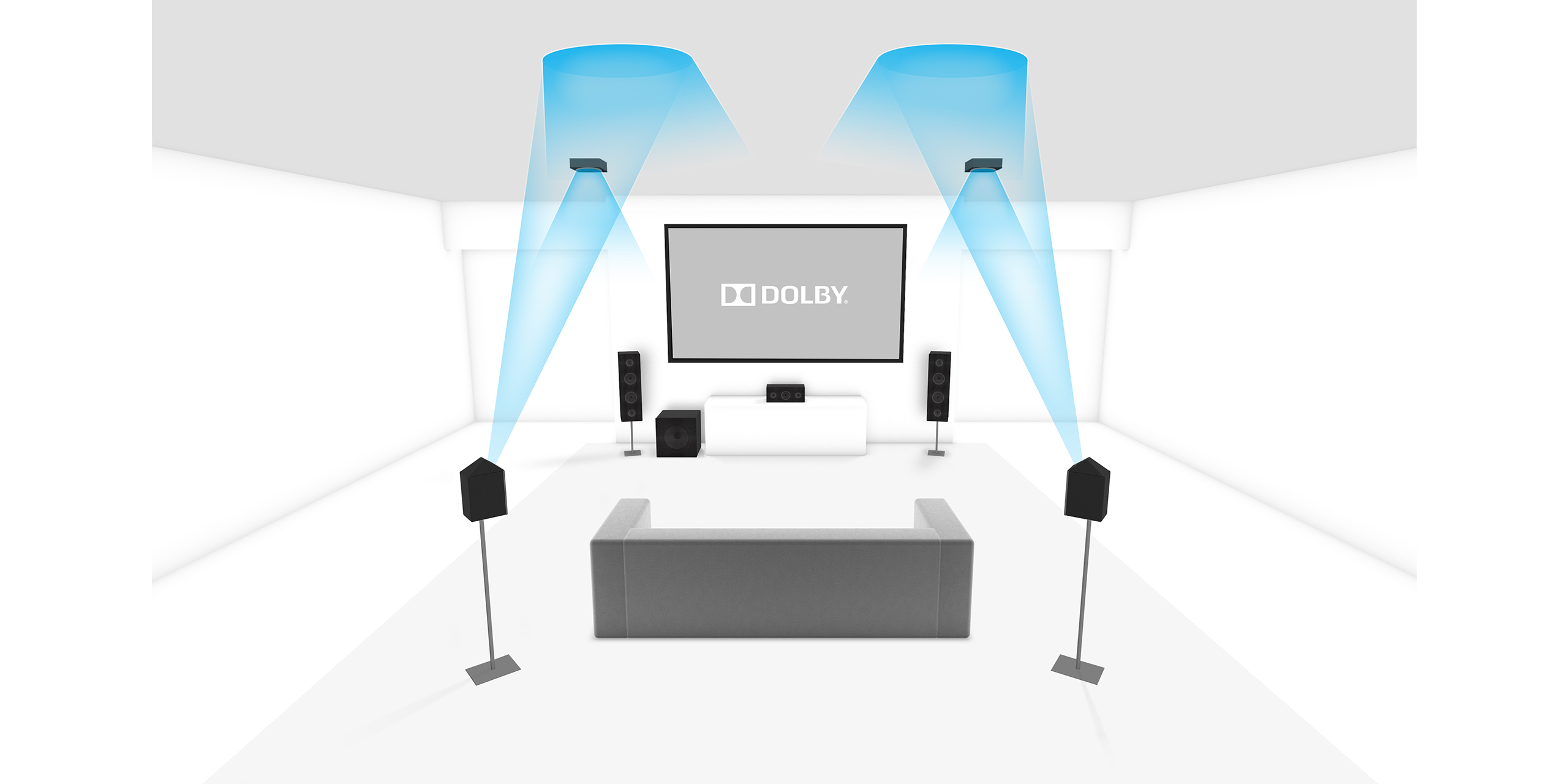
DTS:Ten vs Dolby Atmos
These height-of-the-line, cutting-edge dwelling movie theatre sound technologies from Dolby and DTS are a step up from traditional surroundings sound. They recreate object-based effects, such as a plane flight overhead or bullets zinging around the room, thanks to multiple audio signals aimed at set-ups with a greater number of speakers than the standard 5.1.
Again, both should create an immersive experience, but there are some crucial differences between the two.
Dolby Atmos uses speakers placed in the ceiling to create a 'bubble' of audio. Not bully to cut holes in your ceiling? At that place's a range of simpler options, such as Dolby Atmos soundbars with upfiring drivers that bounce the audio off the ceiling to like effect, or – improve yet – upfiring modules that can sit on top of your traditional speakers.
LG's OLED TVs over the past years also support Atmos, while the 2022 Panasonic LZ2000 4K OLED TV (and some of the company's older flagship TVs) has its own up-firing Dolby Atmos speakers built into the rear of the set.
You can find Dolby Atmos products from an increasing number of hardware manufacturers, besides as across Blu-ray discs and streaming services, including Amazon Prime Video, Netflix and Disney+. TV broadcasters such as Sky and BT are increasingly supporting Atmos, too.
DTS:X is a scrap more flexible. It works with standard surround sound set-ups and doesn't require extra overhead speakers. You can also manually adjust sound objects, significant you can creepo upward the volume of voices on a soundtrack making information technology easier to hear dialogue over loud effects.
Effectually 90 per cent of the home AV industry supports DTS:X, with many manufacturers either releasing firmware updates for existing receivers or launching new models. The downside? It is less common and y'all won't find it on whatsoever streaming services, even on Disney+ where Curiosity movies are bachelor in 'IMAX Enhanced', a presentation format from the same company every bit DTS (Xperi) and which typically uses DTS sound.
- Our pick of the best Dolby Atmos soundbars 2022
Which is better: DTS or Dolby Digital?
Based on the specs alone, DTS beats its rival with higher bit-rates that promise a more realistic movie experience. That said, other factors such as bespeak to noise ratio and speaker calibration mean that enough of audiophiles would rate Dolby above DTS.
With standards constantly evolving, the all-time way to upgrade your motion picture night is to ensure yous have good-quality components, set up properly and fed the highest possible source material. That way, whether it's DTS:10 or Dolby Atmos, yous'll be treated to thrilling dwelling cinema entertainment.
MORE:
The best Dolby Atmos motion picture scenes to exam your speakers
The Best AV receivers , all-time speaker packages and best soundbars you tin buy
Is the DTS vs Dolby war effectively over?
Source: https://www.whathifi.com/advice/dts-vs-dolby-digital-whats-the-difference
0 Response to "Dts Connect Vs Dolby Digital Live"
Post a Comment